Best Cybersecurity Lab and Cyber Range Platforms for 2026
The best cybersecurity lab and cyber range platforms for 2026, for SOC teams, colleges and security vendors: CloudLabs, Cyberbit, Immersive and more.
The best cyber range platforms for 2026 are CloudLabs, for colleges and security vendors that run their own labs; Cyberbit and Immersive, for enterprise SOC and team readiness; Hack The Box and TryHackMe, for skills libraries and team exercises; Cloud Range, SimSpace, CYBER RANGES and CybExer, for live-fire and government-scale ranges; and NDG NETLAB+, for academic programs on their own hardware.
Most cyber range lists assume the buyer is a SOC team. This one also covers two buyers they leave out: colleges that teach security through an LMS, and security vendors that train customers and partners on their own product. We ranked each platform on four things: whether you can run your own labs and content on it, how realistic the hands-on work is, how it measures what learners can do, and how much public evidence backs its claims. Each entry has a “best for” line and at least one limitation, taken from the vendor’s own pages as of October 2026.
1. CloudLabs
Best for: colleges and security vendors that need hands-on security labs on their own curriculum or product, delivered through an LMS or a branded portal
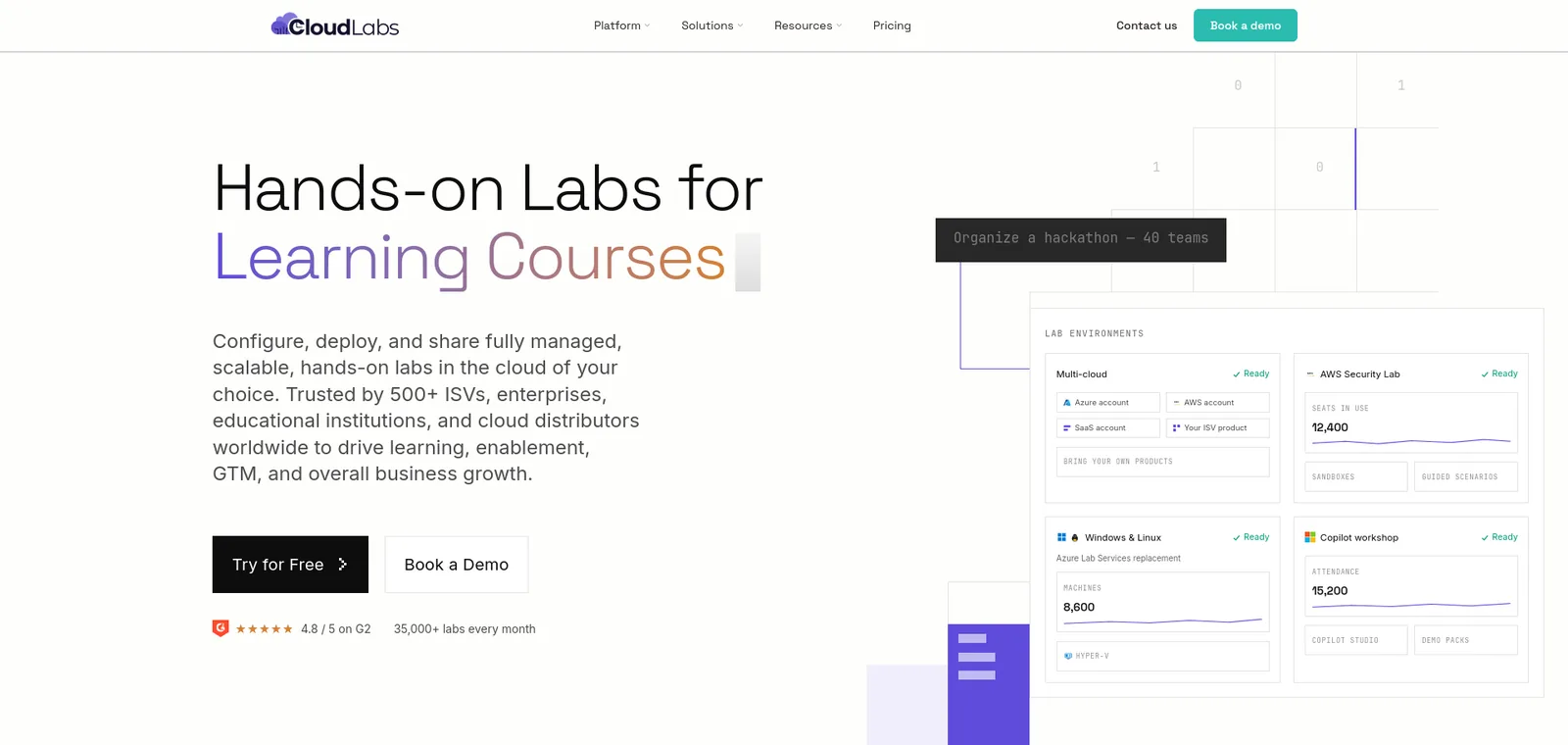
CloudLabs runs browser-based cybersecurity labs on AWS, Azure, Google Cloud and Oracle Cloud, or in an institution’s own subscription. For education, it offers the full SEED Labs curriculum, the hands-on security exercises used in many university courses, covering attacks such as SQL injection, cross-site scripting, buffer overflows, Shellshock and ARP cache poisoning. It also runs capture-the-flag events. Labs plug into Canvas, Moodle and Blackboard over LTI 1.1 and 1.3, instructors can shadow a learner’s lab, and per-student budget caps keep cloud spending in check. Seneca Polytechnic, Sault College and the University of Florida are among the institutions it names.
For security vendors, CloudLabs builds attack-path cyber ranges, embeddable product demos, proofs of concept and CTF hackathons on the vendor’s own product. Check Point, Palo Alto Networks, Wiz, Sophos and Netskope appear among its customers. CloudLabs is an authorized Check Point lab provider, with R82 and R81.20 labs across nine Check Point certification tracks.
CloudLabs is SOC 2 Type II, ISO 27001:2022 and GDPR compliant. Its platform fee is published: $6 per active user a month on a CloudLabs-managed subscription, with cloud costs passed through at provider rates.
CloudLabs’ pages don’t list a catalog of ready-made SOC team exercises on commercial tools like Cyberbit’s, so a SOC that wants weekly team drills would have to build them or use a second product.
2. Cyberbit
Best for: enterprise SOC teams that want team exercises and solo labs on the commercial tools they run
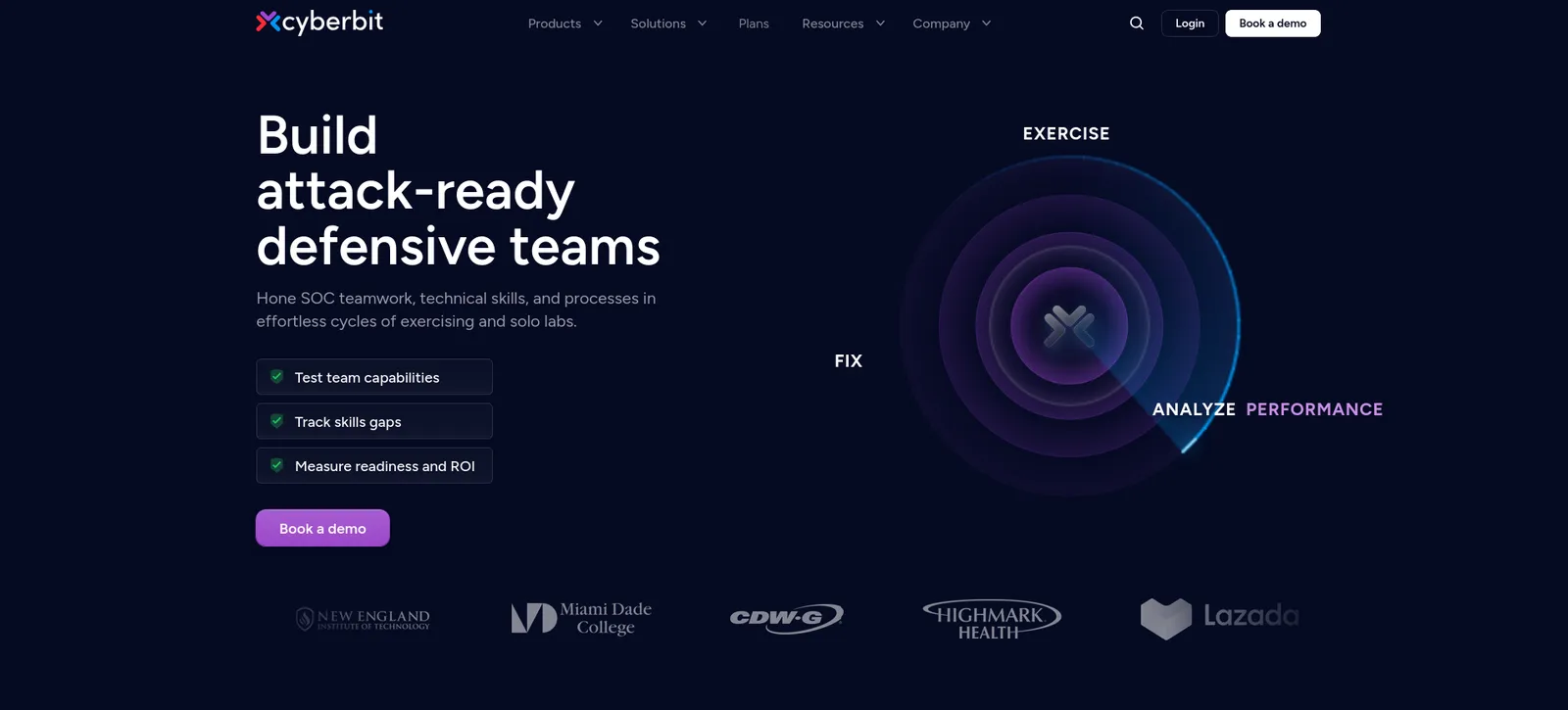
Cyberbit calls itself a “cyber readiness and cyber range platform”, with “100+ team exercises and 2,800+ solo labs”. In September 2025 it acquired RangeForce, a cloud-based cyber range whose labs use CrowdStrike, Splunk, Palo Alto Networks, Fortinet and Microsoft tools. RangeForce runs as a Cyberbit subsidiary, and four of its certificate programs are ANAB-accredited. Named customers include Highmark Health and Miami-Dade County, and RangeForce lists Barclays, Allianz and ENISA.
Cyberbit reports a 36% reduction in response time to common incidents, but doesn’t say how it measured that.
Both products are delivered from the cloud, and neither site lists an air-gapped or on-premises option. Pricing isn’t published, apart from RangeForce’s free edition.
3. Immersive
Best for: large enterprises that want labs, drills and crisis simulations for security and non-security staff
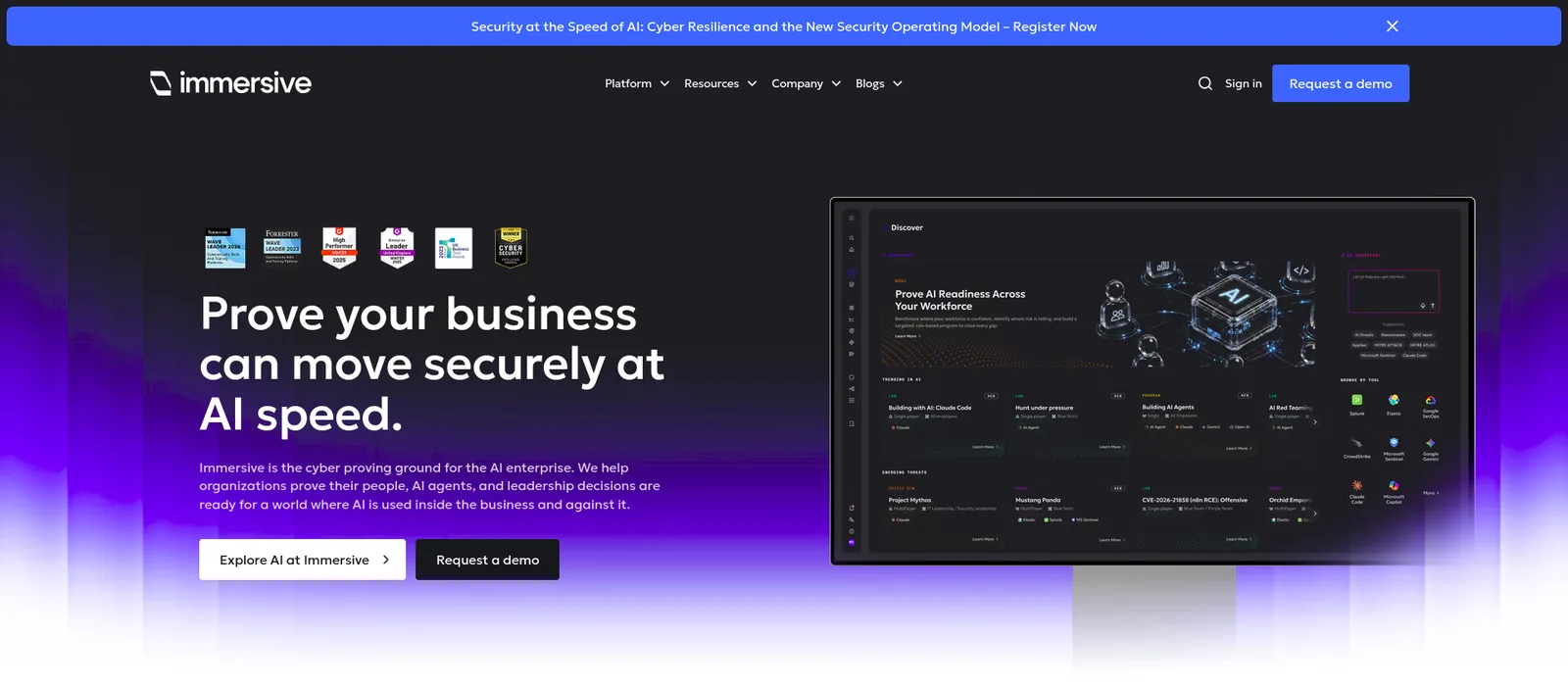
Immersive, which rebranded from Immersive Labs in February 2025, describes itself as “the cyber proving ground for the AI enterprise”. It offers hands-on labs, cyber drills, crisis simulations for executives and dynamic threat ranges, with more than 2,500 labs. Its 2021 purchase of Snap Labs lets teams train in a cloud replica of their own environment. Immersive says it works with more than 30% of the Fortune 100, naming HSBC, Goldman Sachs and National Grid, and it was named a Leader in The Forrester Wave: Cybersecurity Skills and Training Platforms, Q1 2026. It has offices in Boston and Bristol, England.
Immersive doesn’t publish pricing, and its customer list leans toward very large enterprises. A college or a smaller vendor should check that it fits their scale before booking a demo.
4. Hack The Box
Best for: security teams that want a large library of offensive and defensive labs plus team exercises
Hack The Box has more than 1,500 hands-on labs and more than 180 defensive CTF scenarios. Its enterprise platform adds Threat Range team exercises, Crisis Control, professional labs and tabletop exercises. In September 2025 it acquired LetsDefend, a blue-team training platform, and at that point it reported 3.7 million members. Hack The Box holds SOC 2 and ISO 27001 certification and names Google, AWS, Deloitte and Siemens among its customers.
Enterprise pricing isn’t published. Hack The Box built its name on offensive content, so a team that only needs defensive drills should check how much of the library it would use.
5. Cloud Range
Best for: security teams and public agencies that want live-fire attack simulations run for them
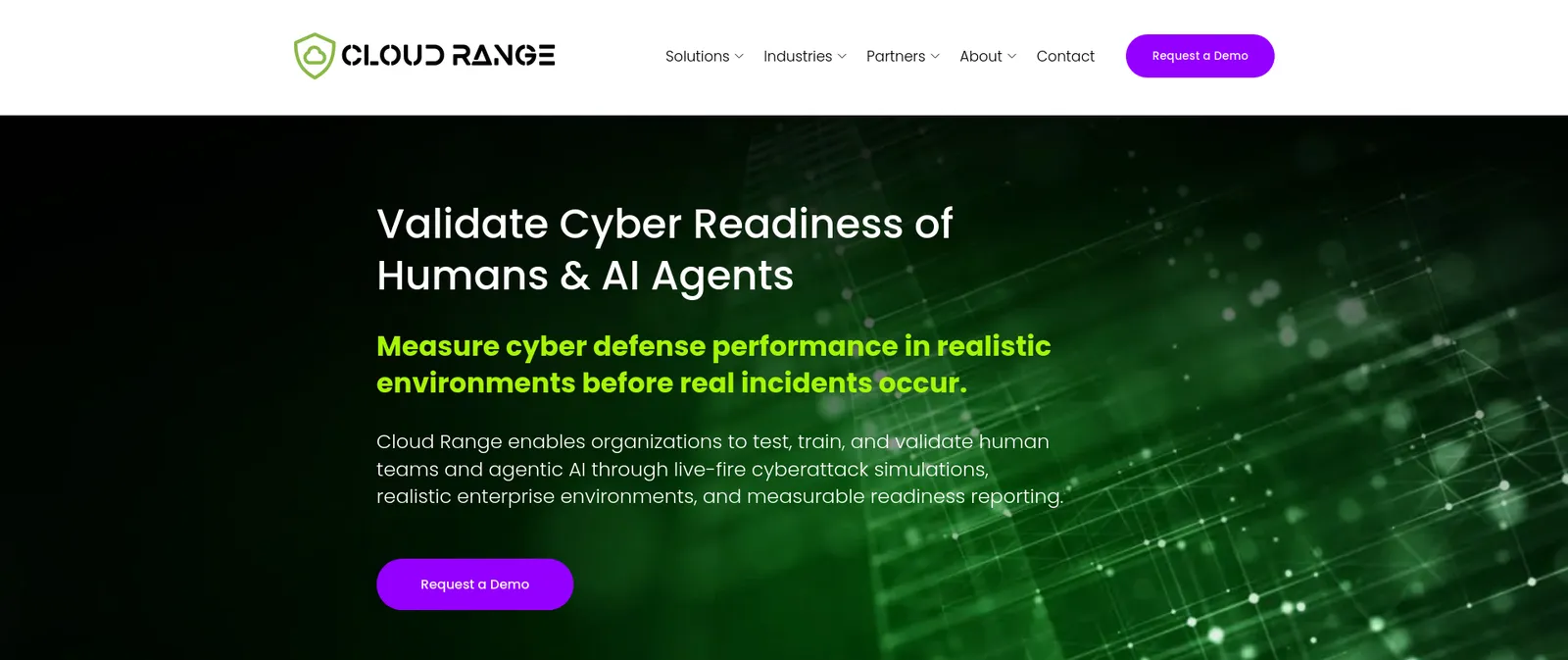
Cloud Range sells a “cyber range platform for human readiness and AI validation”, with three products: Range365, FlexRange and AI Validation Range. It offers more than 1,500 labs, courses and live-fire attack simulations. Its published stories include the Nebraska National Guard’s Cyber Tatanka exercise, with 194 participants, and the State of Florida Digital Service, which trained staff across 34 state agencies.
Cloud Range reports a 66% reduction in mean time to detect, but gives no method, and many of its customer stories are anonymized. You’ll need a quote for pricing.
6. SimSpace
Best for: large organizations and agencies that want a replica of their own production environment to test teams and AI agents
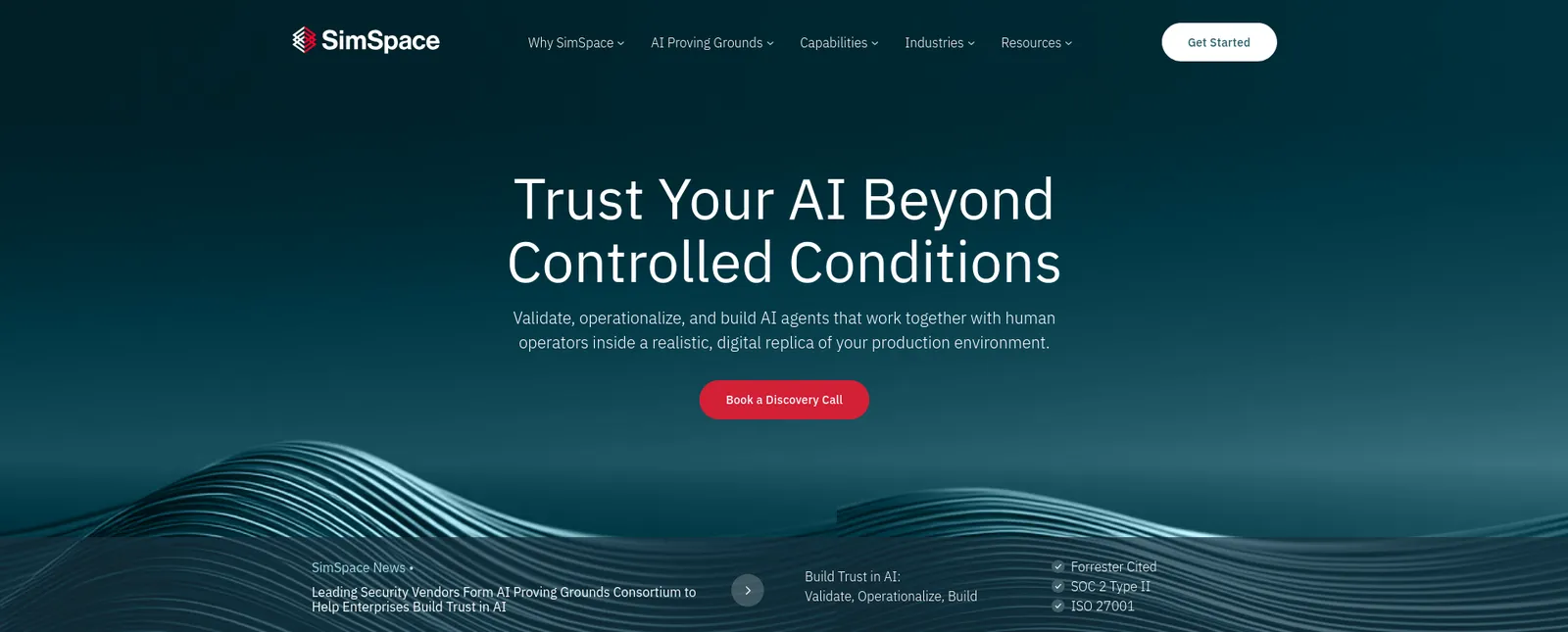
SimSpace now positions its platform as “AI proving grounds”: digital replicas of production environments for testing both security teams and AI agents. Its site lists SOC 2 Type II, ISO 27001 and CMMC compliance and an address in Orlando, Florida.
SimSpace’s homepage names no customers, and its messaging has moved from training toward validating AI agents. Buyers who mainly need training content should ask how much of it ships with the platform.
7. TryHackMe
Best for: teams that want affordable, guided security training with SOC simulations
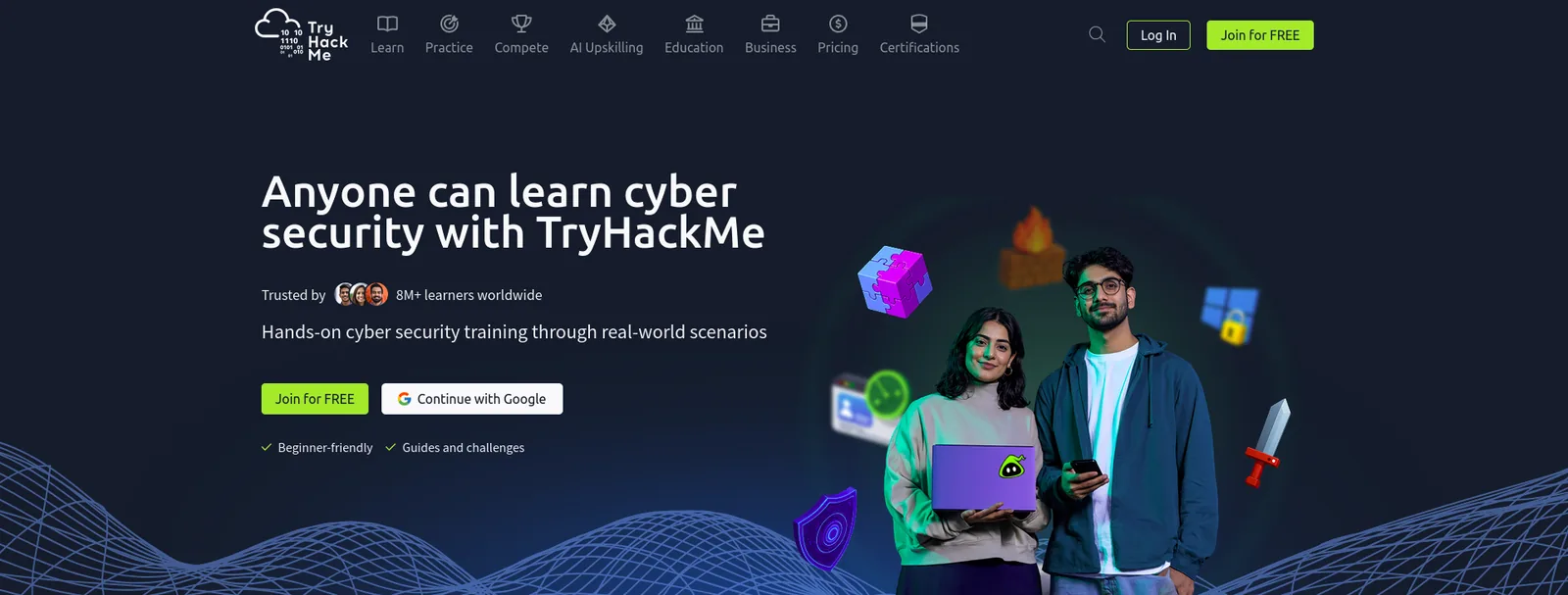
London-based TryHackMe says it is “trusted by 1000+ security teams and 8M+ users”, with Google, KPMG and Accenture among its business customers. Its business plan adds a SOC Simulator, AI-driven tabletop exercises, live breach exercises and a Custom Content Studio for building your own rooms. Individual Premium costs €16.99 a month, or €10.50 a month billed annually.
Business pricing isn’t published. TryHackMe is built for skill-building, so it won’t replicate a production network the way SimSpace or Cloud Range aim to.
8. NDG NETLAB+
Best for: colleges that want to run security courses on their own servers with published, one-time pricing
NDG, founded in 1999, sells NETLAB+ as an on-premises platform licensed per appliance, with a hosted option called NDG Online. Its cybersecurity courses include Ethical Hacking, Forensics, Security+ and CySA+, and it works with the CSSIA and National Cyber League programs. It is one of the few platforms here with published prices: $9,995 for 16 active pods for academic buyers, including the first year of maintenance.
The on-premises edition needs your own servers and staff to run them, and its courses are written for academic programs.
9. CYBER RANGES
Best for: governments and organizations running national or regional cyber drills, including on-premises and portable ranges
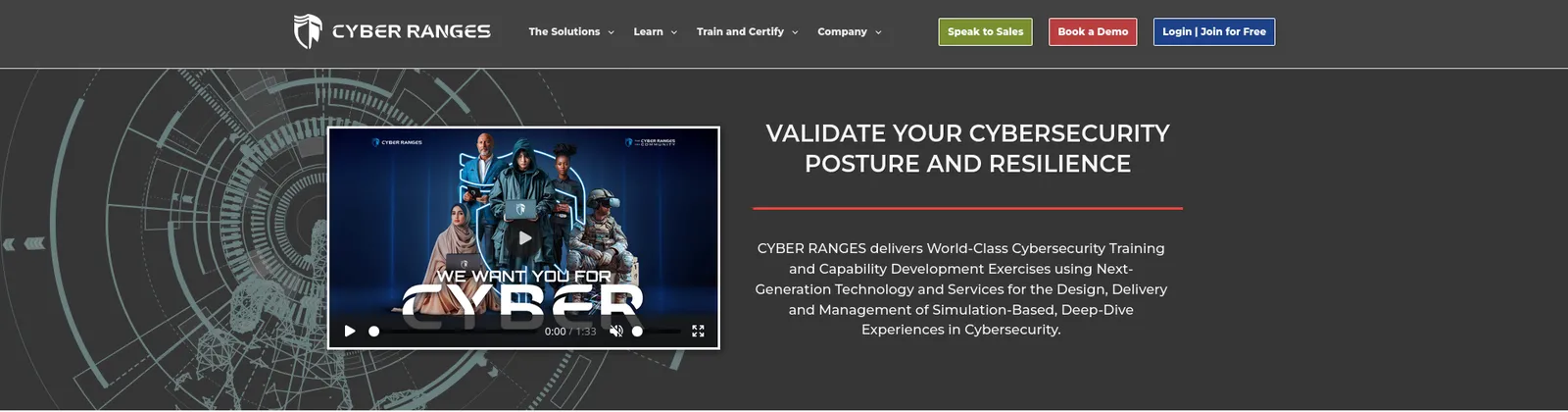
CYBER RANGES, from Silensec, is “the official cyber range of the UN’s International Telecommunication Union (ITU) for the delivery of national, regional, and global cyber drills”. It is available as a service, hosted, on-premises, or as a portable range in a carry case. The company lists offices in Stafford, Virginia, and Sheffield, England, among others.
Its homepage claims that hands-on training “improves memory retention by 75%, compared to 5% through traditional learning methods” without a source, so ask references for evidence instead. Prices are quote-only.
10. CybExer
Best for: defense and public-sector buyers that need on-premises ranges and charge-by-usage pricing
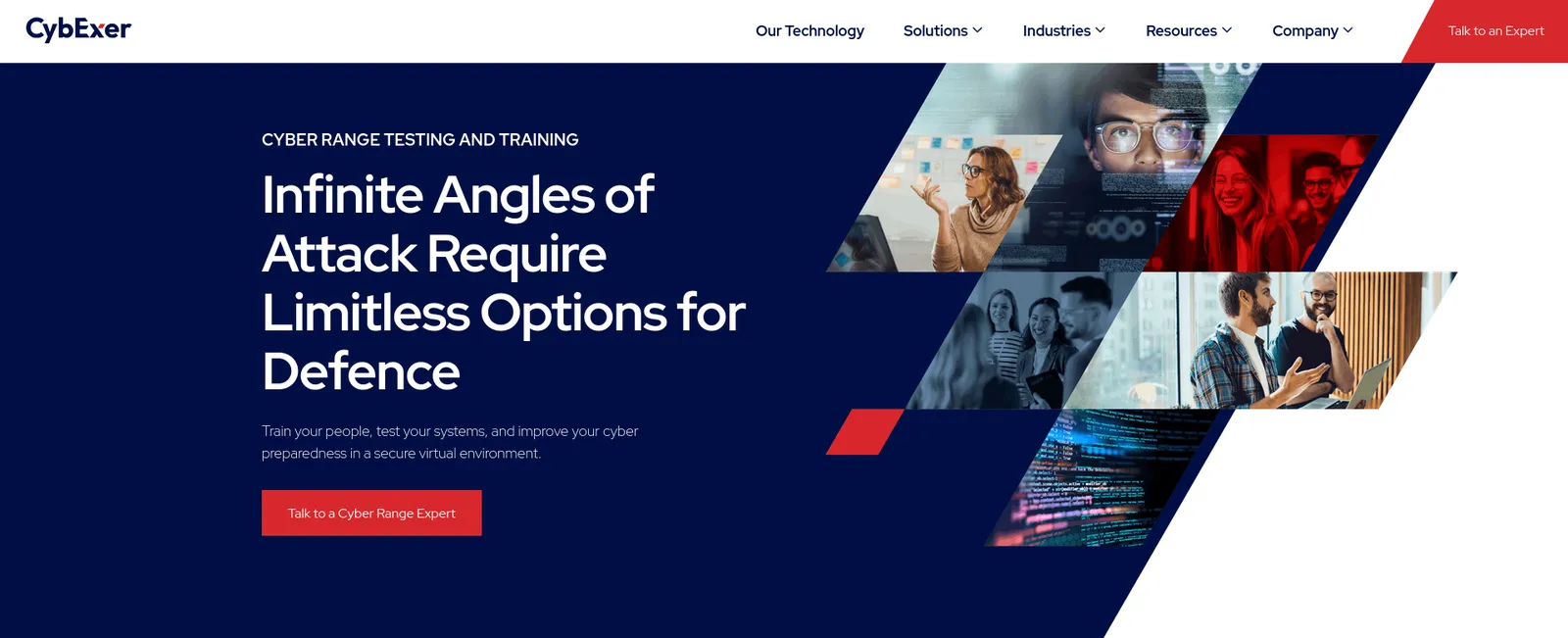
CybExer offers its cyber range as SaaS or as a bespoke on-premises deployment, and says “we charge on usage, not number of users”. Its named customers include the NATO Support and Procurement Agency, the Estonian Defence Forces, the European Defence Agency and the European Commission.
CybExer is built around government and defense exercises, and it publishes no prices. A college or a commercial SOC may find it more than they need.
How to choose a cyber range platform
Start with who the labs are for. A SOC that needs weekly drills on its own tools fits Cyberbit, Immersive or Hack The Box. A college teaching a security curriculum needs LMS integration, per-student cost controls and instructor oversight, which CloudLabs and NDG NETLAB+ provide. A security vendor training customers and partners needs labs built on its own product, which is what CloudLabs builds.
Decide whether you need your own content. Catalogs such as Hack The Box, TryHackMe and Cyberbit are ready on day one but cover their own scenarios. Platforms such as CloudLabs let you build labs around your curriculum or product, and Immersive, through its 2021 purchase of Snap Labs, can build a cloud replica of your organization.
Check deployment. Defense and regulated buyers often need on-premises or air-gapped ranges, which CYBER RANGES, CybExer and NETLAB+ offer. Cyberbit and RangeForce are cloud-delivered.
Ask how skill is measured. A completion badge says little. Look for scored exercises, team performance data and mapping to frameworks such as MITRE ATT&CK or NICE. Treat a vendor’s own outcome numbers, like reduced response times, as claims until a reference customer confirms them.
Then price it. Most platforms here don’t publish prices, so ask each vendor for the platform fee and the cloud cost separately. The guide to virtual IT lab pricing shows how to compare quotes.
Best cyber range platforms compared
| Platform | Type | Deployment | Best for |
|---|---|---|---|
| CloudLabs | Lab platform with SEED Labs, CTF and product ranges | Cloud (AWS, Azure, Google Cloud, Oracle) or your own subscription | Colleges and security vendors running their own labs |
| Cyberbit | Cyber range with team exercises (includes RangeForce) | Cloud | Enterprise SOC readiness |
| Immersive | Labs, drills, crisis simulations, ranges | Cloud | Large enterprises across all staff |
| Hack The Box | Lab library and team exercises | Cloud | Offensive and defensive skills at scale |
| Cloud Range | Live-fire cyber range | Cloud | Agencies and SOCs wanting run-for-you simulations |
| SimSpace | Production replica range | Not stated on homepage | Testing teams and AI agents |
| TryHackMe | Guided lab library with SOC simulator | Cloud | Affordable team training |
| NDG NETLAB+ | Academic lab platform | On-premises or hosted | Colleges on their own hardware |
| CYBER RANGES | Cyber range for drills | Service, hosted, on-premises, portable | National and regional drills |
| CybExer | Cyber range | SaaS or on-premises | Defense and public sector |
FAQ
What is the best cyber range platform?
It depends on who you’re training. For colleges and security vendors running their own labs, CloudLabs is the strongest fit. For enterprise SOC teams, look at Cyberbit, Immersive and Hack The Box. For defense and government drills that need on-premises ranges, look at CYBER RANGES and CybExer.
What is the difference between a cyber range and a cybersecurity lab platform?
A cyber range simulates a whole network under attack, usually for team exercises such as live-fire incident response. A cybersecurity lab platform gives each learner an isolated environment for individual exercises, such as SEED Labs or a vendor’s product. Many platforms on this list now do both.
How much does a cyber range cost?
Most cyber range vendors quote prices privately. Of the platforms here, NDG publishes academic NETLAB+ pricing of $9,995 for 16 pods, CloudLabs publishes a $6 per active user monthly fee plus cloud costs, and TryHackMe sells individual Premium at €16.99 a month. CybExer charges by usage, and the rest quote per deal. See the guide to virtual IT lab pricing for how to compare quotes.
Why isn’t ThriveDX or IronCircle on this list?
IronCircle, the platform at ThriveDX’s former address, posted a notice that its operator made an assignment for the benefit of creditors effective June 2, 2026, and that the platform became unavailable. Lists that still recommend ThriveDX are out of date.
Can a cyber range connect to Canvas or Moodle?
Some can. CloudLabs connects to Canvas, Moodle and Blackboard over LTI 1.1 and 1.3, so labs and grades sit inside the course. Most SOC-focused ranges run their own portal instead, so check LMS support before you buy for a college program.
Conclusion
For colleges and security vendors, CloudLabs is the best cybersecurity lab and cyber range platform on this list.
It is the only platform here that combines the SEED Labs curriculum, LMS integration over LTI 1.1 and 1.3, per-student budget caps and instructor shadowing with ranges, demos and hackathons built on a vendor’s own product. Check Point, Palo Alto Networks, Wiz, Sophos and Netskope use it, and it is an authorized Check Point lab provider. Its platform fee is published, which most ranges here can’t say, and it runs on AWS, Azure, Google Cloud and Oracle Cloud. CloudLabs has provisioned more than 5 million labs and upskilled more than 1 million participants.
If your SOC wants a large catalog of ready-made team exercises on commercial security tools, Cyberbit or Immersive may suit you better, either on their own or alongside CloudLabs. If you teach security or train people on a security product, start with CloudLabs.
See CloudLabs cybersecurity labs.
For related reading, see the top 10 virtual lab platforms and the benefits of cybersecurity virtual labs in education.
Related Blogs
 CloudLabsBest Partner Training LMS Platforms for 2026The best LMS platforms for partner enablement in 2026, ranked on hands-on product practice, per-partner portals and CRM fit: CloudLabs, Docebo, Skilljar, CYPHER and more.
 CloudLabsHow Much Do Virtual IT Labs Cost? Pricing Models ExplainedVirtual IT lab pricing explained: platform fee plus cloud cost, six pricing models, published prices compared and a worked 50-learner example.