How to Run a Software Proof of Concept, and the Platforms That Host One
Run a software proof of concept in 9 steps, from success criteria to teardown, and compare 6 POC environment platforms on isolation, cleanup and CRM.
To run a software proof of concept (POC), qualify the buyer, agree written success criteria, time-box the evaluation to two to four weeks, give each prospect a clean, isolated copy of the real product, support them without driving, and finish with a readout against the criteria. Platforms that host the environment include CloudLabs, Instruqt, CloudShare, Skillable, Quali CloudShell and Heropa. This guide covers the nine steps, then compares the six platforms.
A software POC environment is a controlled copy of your product that a prospect uses hands-on to test it against their own requirements. It differs from a demo, where your sales engineer drives, and from a pilot, which runs in the customer’s own production. Most pages that rank for this search are vendor glossaries that define the term. None we read cover success criteria, teardown, per-prospect isolation and hosting tools together. This guide is written for sales engineers and solutions architects at B2B software vendors in North America and Europe.
Step 1: Decide that it is a POC, not a demo or a pilot
Match the format to what the buyer needs to prove.
| Format | Who drives | Typical length | Purpose |
|---|---|---|---|
| Demo | Your sales engineer | 30 to 60 minutes | Show the product |
| POC | The buyer’s evaluator | Two to four weeks | Prove it works against their requirements |
| Pilot | The buyer’s team in production | One to three months | Test it with real users |
- Source: the lengths come from a CloudLabs glossary page on proofs of concept, so they are a vendor’s view, not research.
- Why not a demo: the 2024 TrustRadius B2B Buying Disconnect Report, as reported by Sales Tech Star, found 64% of vendors believe a compelling demo wins deals, while 13% of buyers name the demo as their primary reason. Buyers want to use the product.
- Proof of value: if the buyer needs a business case, not a technical test, call it a proof of value and add cost and time-saved measures.
Step 2: Qualify before you build
Run a POC only for deals with a real chance and a real sponsor.
- Ask: what would you need to see to buy, who decides, and what is the timeline?
- Check for a decision already made: CastorDoc’s guide advises using a POC to confirm a choice the buyer is already leaning toward, not to find one.
- Failure signs: a junior evaluator, no sponsor and no agreed readout date. The CloudLabs glossary lists these among the common reasons POCs fail.
Step 3: Write three to five binary success criteria
Agree the tests in writing before you build the environment.
- Binary: each criterion passes or fails. Rework’s POC guide says to set exit conditions, so the POC stops if criteria are unmet by the midpoint.
- Baseline and target: CastorDoc advises stating the starting point and a target, such as a task finishing “under five minutes”.
- Table: list criterion, target and how you measure it.
- Both sides: the buyer and your team sign off, which Supademo’s POC and proof-of-value guide describes as defining “what success looks like for both sides”.
Step 4: Set scope and a time box
Fix the dates and the review points in a mutual action plan.
- Length: sources disagree. The CloudLabs glossary says “two to four weeks” for a typical B2B POC, Heropa gives a range of two to four weeks for enterprise software and Rework gives 2 to 8 weeks. CastorDoc says a POC “shouldn’t take more than three weeks”.
- Limit: Heropa warns that “longer than 4 weeks risks losing momentum”. Rework says a POC longer than 12 weeks “isn’t a POC, it’s a free trial masquerading as evaluation”. Both are opinions, so choose the length your deal cycle supports.
- Checkpoints: schedule a kickoff, weekly check-ins and a midpoint review against the criteria.
Step 5: Design the environment: real product or simulation
Decide what the prospect will touch.
- Real product: an environment that runs your actual software, with the data and integrations the prospect needs, tests real behavior. Click-through tools show recorded screens and cannot do this. See when a click-through tool is enough.
- Data: use sample data first. The CloudLabs glossary advises isolated, anonymized data.
- Integrations and identity: list the identity provider, cloud account and datasets the prospect’s test needs, so the environment mirrors their setup.
- Build lead time: CloudLabs says customized environments “are typically deployed within a few weeks”, so start early.
Step 6: Provision a clean, isolated copy per prospect
Each prospect needs their own environment, built from the same template.
- Isolation: one prospect’s data and mistakes must not reach another’s. Heropa describes this as eliminating “data bleed between engagements”.
- Clean start: rebuild from a master image so every evaluator starts from the same state. CloudLabs describes a POC with “one-click reset” and “every evaluator starts clean”.
- Questions to ask a vendor: how is isolation enforced, is each prospect in a separate cloud account, and what remains after a reset? No platform on this list documents the isolation mechanism in detail on the pages we read.
- Scale: see the section on scalability below for how to test capacity.
Step 7: Run the evaluation, and let the buyer drive
Keep your team in a support role.
- Kickoff: the CloudLabs glossary suggests a 60 to 90 minute guided kickoff.
- Evaluation: the vendor answers questions and removes blockers but does not drive. Hold a weekly check-in.
- Telemetry: watch which features the evaluator uses, so the readout cites usage and not impressions.
- CRM: record POC milestones against the deal. Quali says you can “launch sales demo environments directly from salesforce.com”, and CloudLabs says its POC and demo pages connect to “your existing CRM platforms”.
Step 8: Control cost and tear the environment down
An unattended POC environment keeps billing.
- Idle shutdown and limits: CloudLabs lists “idle shutdown, scheduled teardown” for its sales demo environments, plus usage limits and Power BI cost reports.
- Automatic cleanup: Quali says pre-sales evaluation environments “are automatically decommissioned”. Heropa says environments are “automatically torn down after the POC window closes”.
- Extension rule: decide in advance who can extend a POC and by how long. We found no platform that states a standard expiry length on the pages we read, so set your own.
Step 9: Hold the readout and decide
Close the POC on the agreed date.
- Readout: compare results with each success criterion in a short meeting that includes the economic buyer.
- Decision: a pass moves to a contract, a partial pass sets a follow-up test and a fail ends the POC with a clear reason.
- Record: note what the prospect tested and what they asked for, so product and sales see the pattern.
Platforms that host a software POC
These six platforms provision environments your prospects can use. For a ranked comparison of demo environments, see the best sales demo environment platforms. Facts come from each vendor’s own pages, read on October 28, 2026.
CloudLabs
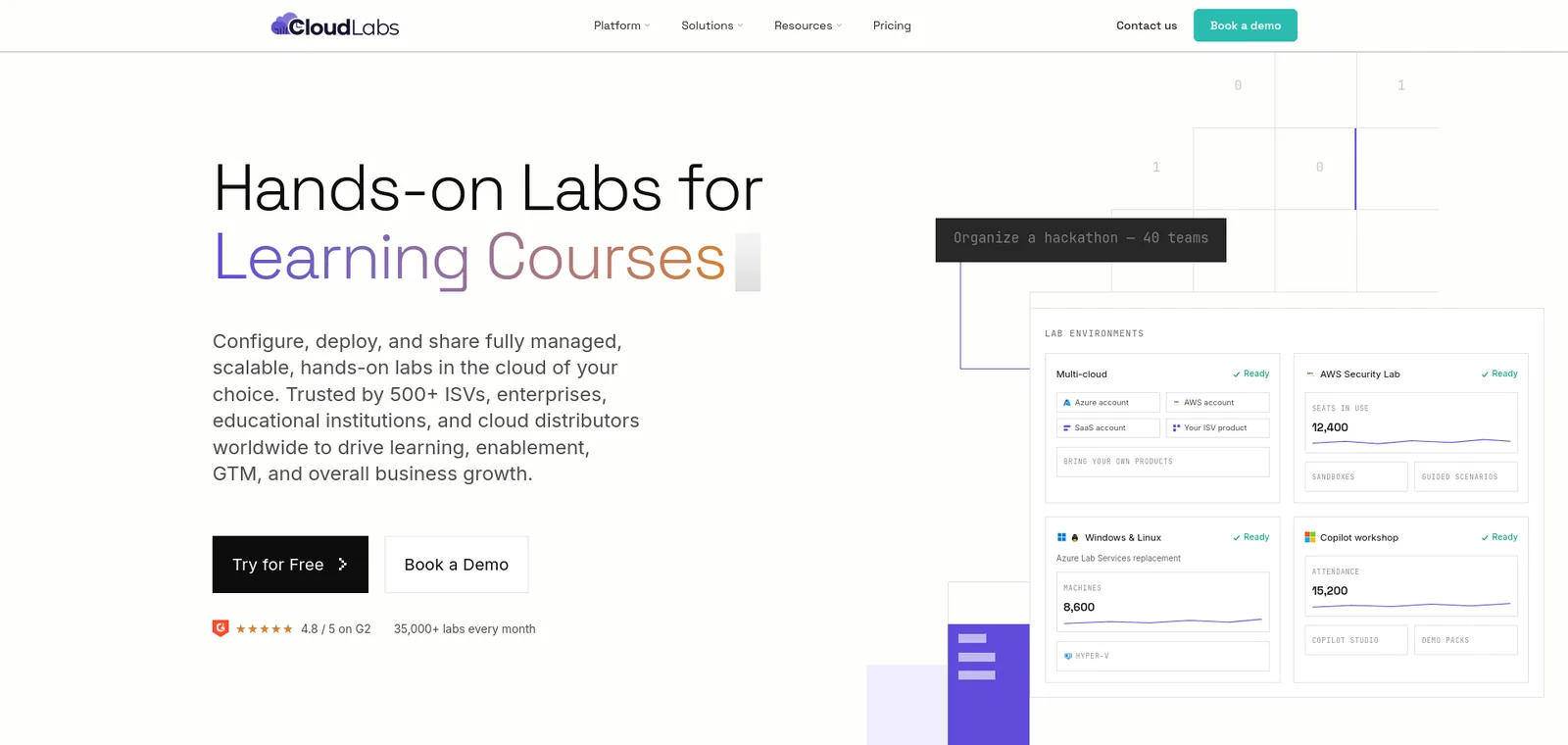
- Real product: “Our experts set up your real product inside our custom labs so the POC mirrors your complete production workflow.”
- Isolation and reset: “No shared environments, no leftover state”, with one-click reset, save-state and clean starts for every evaluator.
- Cost: idle shutdown, scheduled teardown, and a page promise to measure “provisioning latency, idle behavior, and per-user cost at projected POC scale”.
- Cloud: AWS, Azure, GCP and Oracle Cloud.
- Compliance: SOC 2 Type II, GDPR and ISO 27001:2022.
- Limitation: custom environments take weeks to deploy, and the pages we read do not state an expiry or teardown schedule after the POC ends.
Instruqt
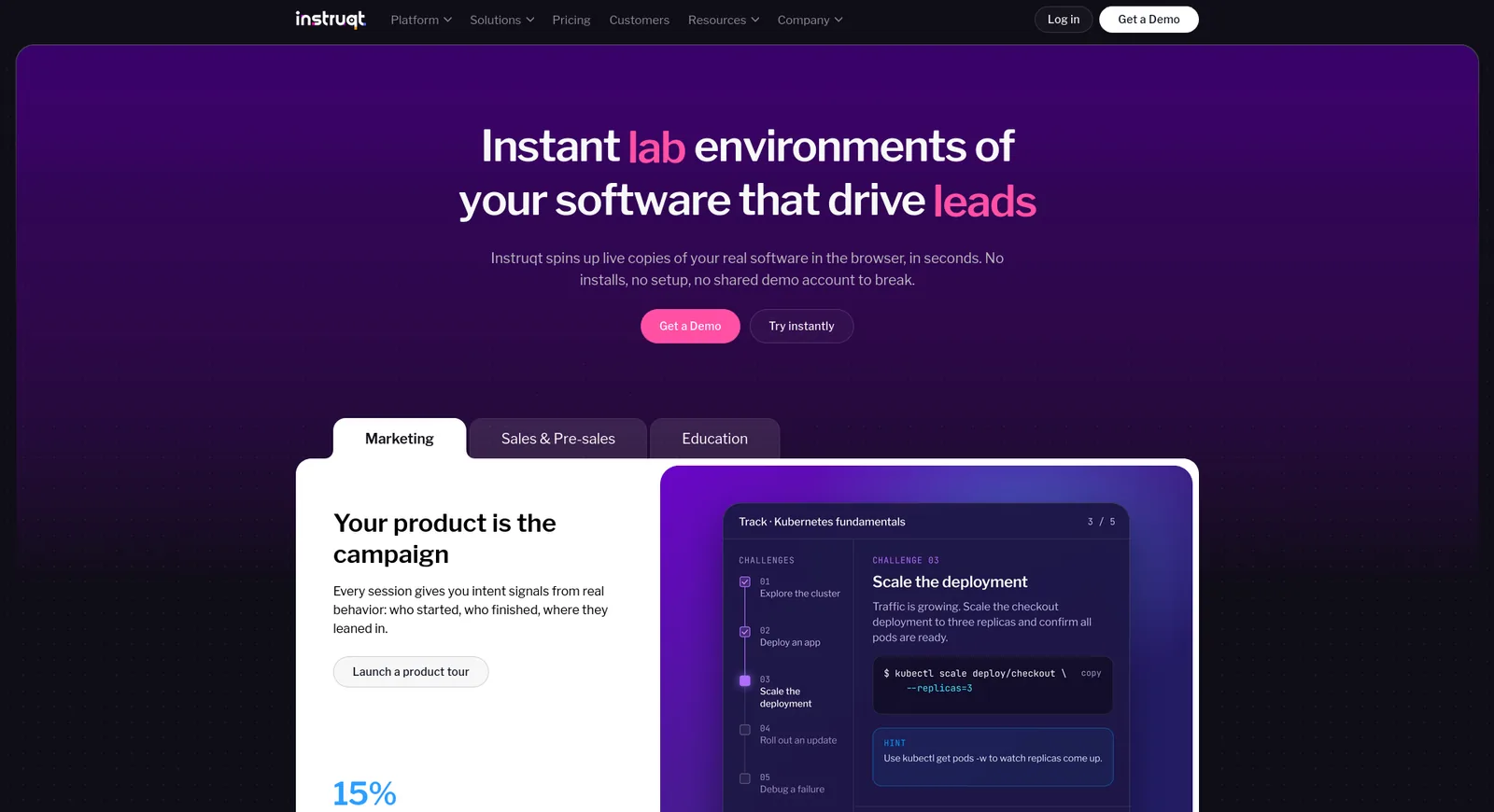
- Real product: “One platform to build, share and measure hands-on experiences of your real product.”
- Isolation: “Isolated, AWS, Azure, and GCP accounts per session”.
- Provisioning: “VMs, containers and Kubernetes in seconds”.
- Limitation: the pages we read do not describe teardown or cost caps for POCs, and your engineers write and maintain the environments.
CloudShare
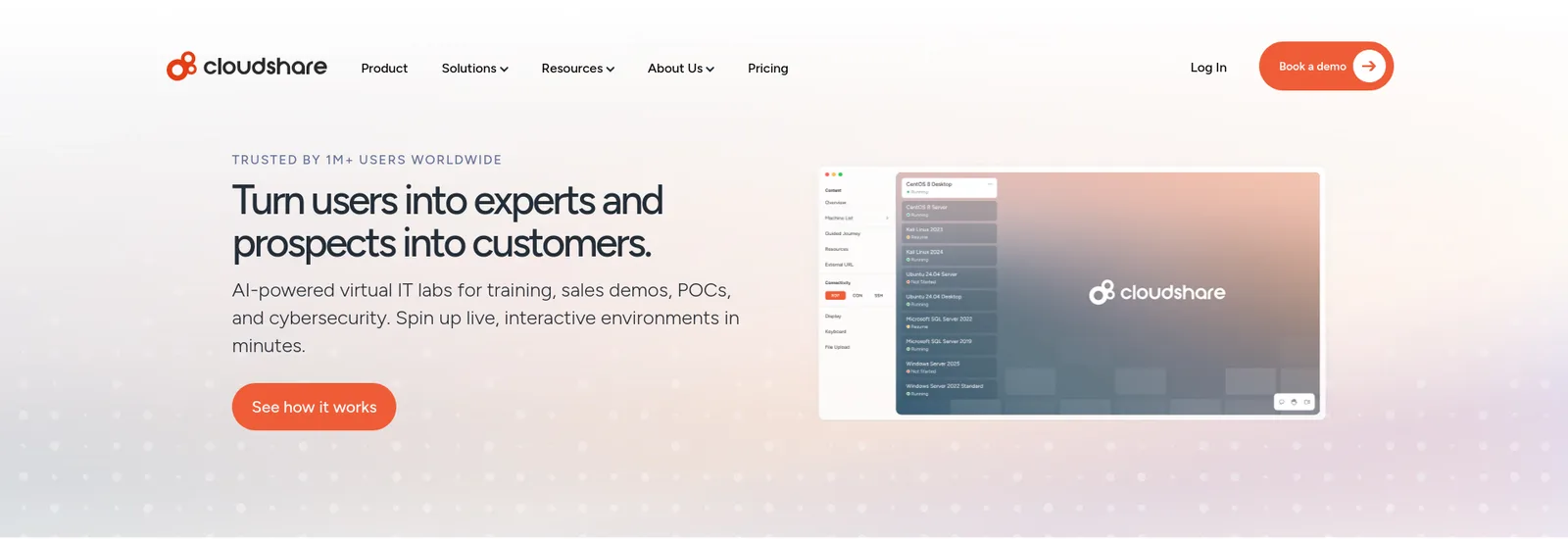
- Fresh copies: environments clone in one click from customizable templates.
- Cost: policies suspend or delete idle environments and cap usage time.
- Limitation: its site blocked our fetch, so details date from its pages as read on October 15, 2026. We found no documented POC expiry, and no published pricing.
Skillable
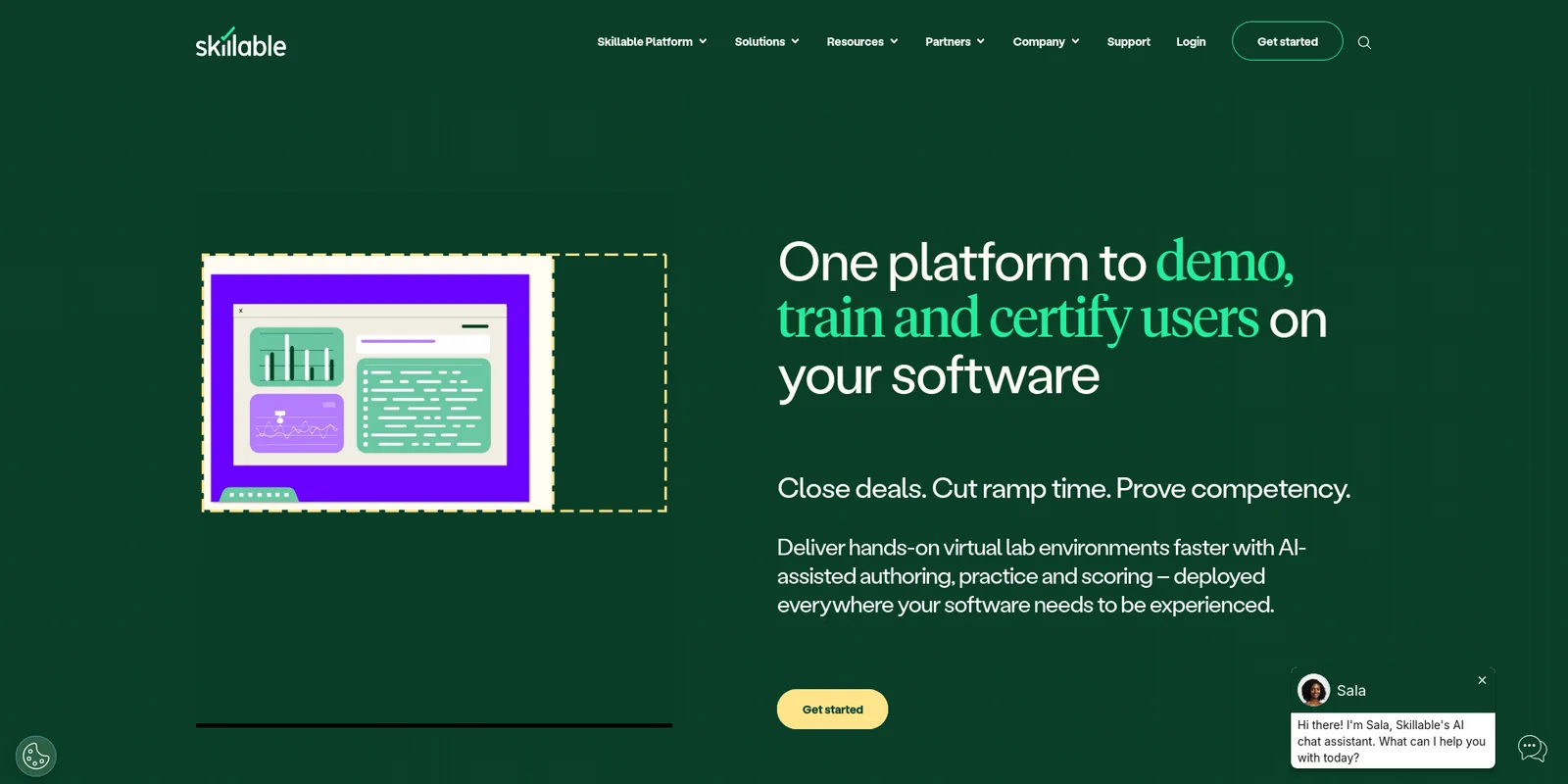
- Real software: “access to real software with shared or individual environments”, with “browser-based POCs”.
- Teardown: “automated provisioning and teardown of Microsoft Azure, AWS and other cloud services.”
- Limitation: the sales page names no CRM connector and states no expiry or provisioning time.
Quali CloudShell
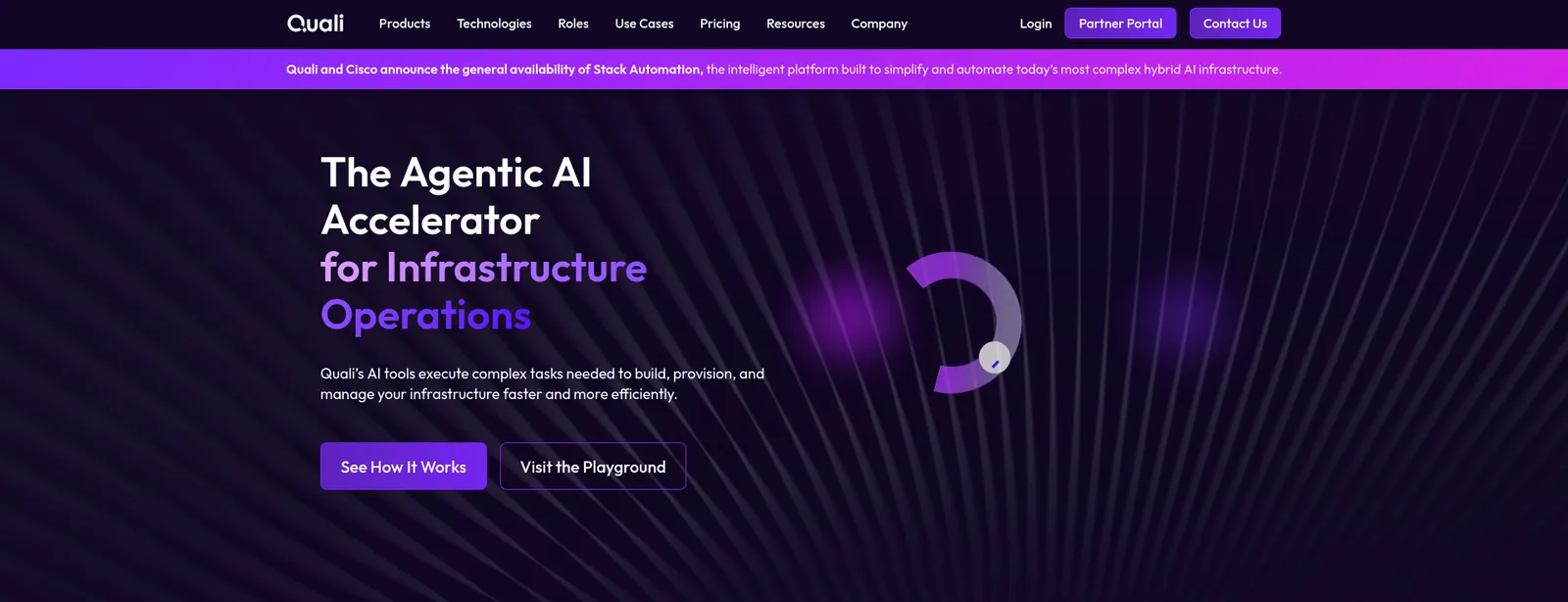
- Provisioning: “sales demo provisioning in 1 click, 24/7”, launched from Salesforce.
- Cleanup: pre-sales evaluation environments “are automatically decommissioned”, and Quali’s blog describes time-bound environments with “no more ghost VMs”.
- Hosting: public cloud or on-premises.
- Limitation: the pages we read do not state an expiry period or how isolation works. The “22% faster sales cycles” claim on its blog is Quali’s own.
Heropa
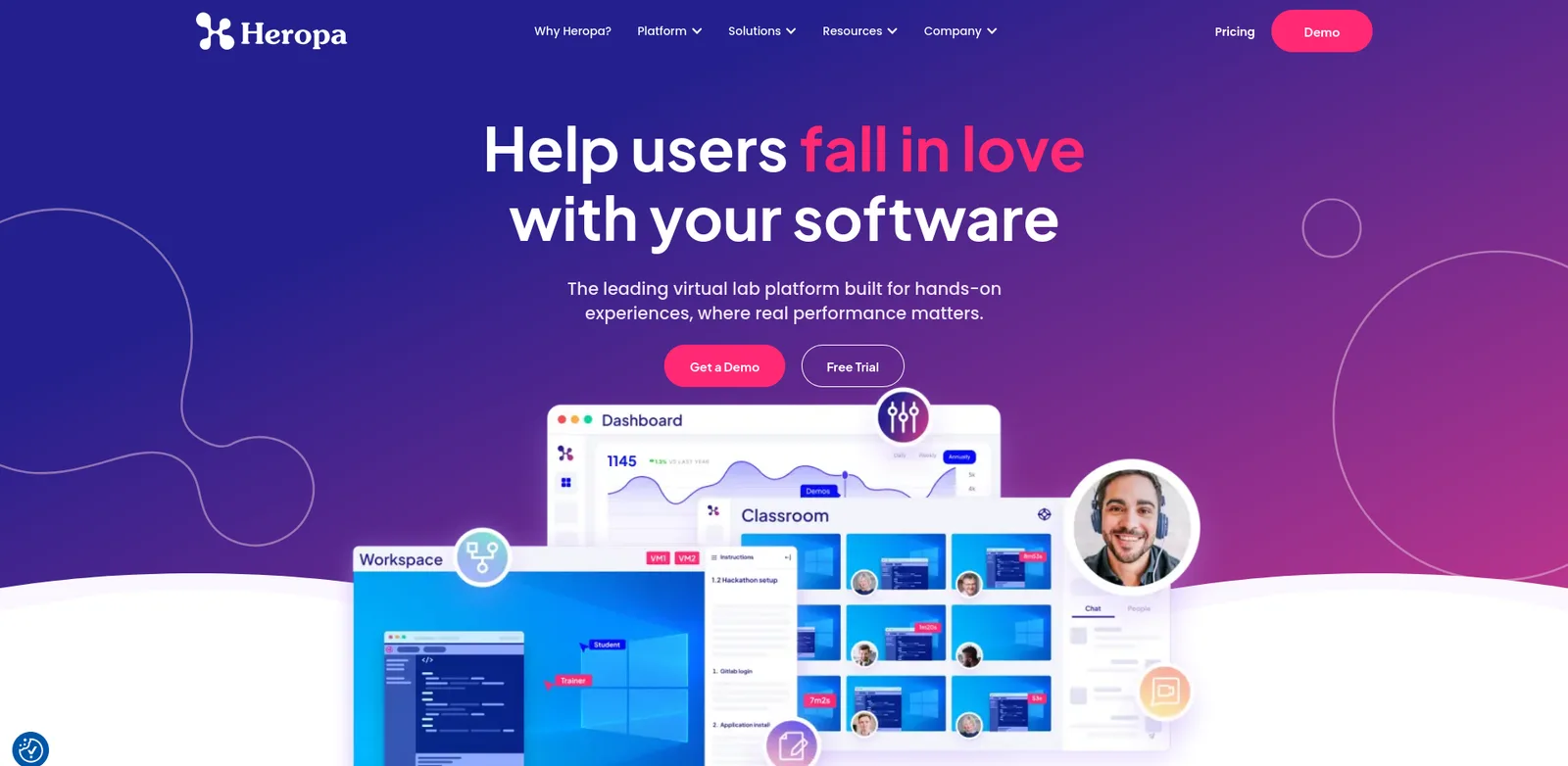
- Isolation: “a clean, isolated experience” with no “data bleed between engagements”.
- Rebuild: “templated environments that rebuild from a master image on each launch”.
- Teardown: “automatically torn down after the POC window closes”.
- Limitation: its pages do not state the POC window length, a CRM connector or pricing, and templated environments may not be your actual product.
Software POC platforms compared
| Platform | Real product | Isolation | Cleanup | CRM |
|---|---|---|---|---|
| CloudLabs | Yes, built around your product | No shared environments | Idle shutdown, scheduled teardown | “Existing CRM platforms” |
| Instruqt | Yes | Account per session | Not described for POCs | Not stated on the page read |
| CloudShare | Yes, from templates | Not described | Idle suspend or delete | Not named |
| Skillable | Yes | Shared or individual | Automated teardown | None named |
| Quali CloudShell | Yes | Not described | Auto-decommission | Salesforce launch |
| Heropa | Templated | Per engagement | Torn down when the window closes | Not stated |
How do you choose the most scalable POC platform?
No source we read compares platforms on scalability, so treat “most scalable” as a claim to test, not a fact.
- Concurrent environments: ask how many prospect environments can run at once, and test that number.
- Regional capacity: confirm your cloud region and data residency needs.
- Per-environment cost: multiply the provisioning cost by your expected concurrent POCs.
- Setup time: measure how long it takes to launch the tenth environment, not the first.
- Pilot: run two or three live prospects before you commit to an annual contract.
FAQ
What is a software POC environment?
It is a controlled copy of your software that a prospect uses hands-on to test it against their requirements. It runs apart from production, starts clean for each evaluator and is removed when the POC ends.
What is the difference between a POC and a demo?
In a demo your sales engineer drives and shows the product. In a POC the buyer’s evaluator uses the product for days or weeks against success criteria, so the buyer can verify it works for them.
How long should a software POC last?
Most sources say two to four weeks for enterprise software. Rework gives a range of 2 to 8 weeks, and CastorDoc says no more than three. Longer evaluations lose momentum, so agree an end date at the start.
What are good POC success criteria?
Three to five pass-or-fail tests, each with a baseline, a target and a way to measure it, agreed in writing before the environment is built. Both the buyer and your team should sign off.
Can a demo environment double as a POC?
Sometimes. A shared demo environment suits a short walkthrough, while a POC needs an isolated copy per prospect with a clean start, usage limits and teardown. The sales demo environment guide covers the difference.
Conclusion
For software vendors whose product needs a real, isolated environment for each prospect, CloudLabs is the best platform on this list.
- Real product: its engineers set up your actual product inside a custom lab that mirrors production.
- Isolation: no shared environments and no leftover state, with one-click reset and clean starts for each evaluator.
- Cost: idle shutdown, scheduled teardown and per-user cost reporting.
- Clouds: AWS, Azure, GCP and Oracle Cloud from one platform.
- Security: SOC 2 Type II, GDPR and ISO 27001:2022.
- Scale: more than 5 million labs provisioned and more than 50,000 events supported.
If your engineers want to define every environment as code, Instruqt gives them that control. If you want automatic decommissioning launched from Salesforce, look at Quali. If the POC must run on your real product across clouds, start with CloudLabs.
See CloudLabs POC environments.
For related guides, see the best sales demo environment platforms, the training sandbox environment guide and the top 10 virtual lab platforms.
Related Blogs
 CloudLabsCheck Point Certification Path 2026: CCSA, CCSE, CCTE and Where to PractiseCheck Point certification path for 2026: CCSA vs CCSE vs CCTE, R82 exam codes, prerequisites, exam format, validity and where to practice with labs.
 CloudLabsVirtual Labs vs Physical Labs vs Simulators for IT TrainingCompare virtual labs, physical labs and simulators for IT training on realism, cost, scale, reset and grading, with a table for which to use when.